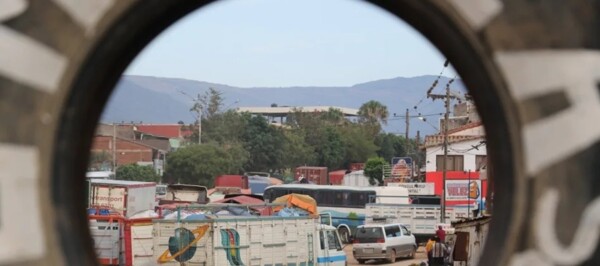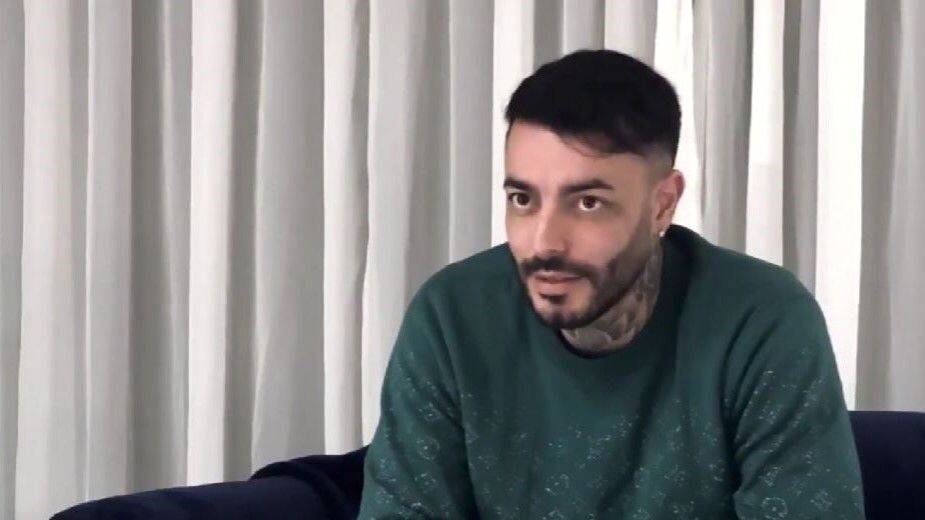
Bolivian authorities later confirmed his subsequent transfer to the United States, while Washington presented the arrest as a success of regional cooperation. According to the official reconstruction, the procedure was carried out in the Las Palmas neighborhood, a residential area of Santa Cruz, through simultaneous raids on two properties located a short distance apart. This case was added to ongoing investigations in Paraguay and Bolivia, where he is accused of drug trafficking, criminal association, and money laundering. The American accusation maintains that he used American banks to move drug profits, which gave Washington its own legal basis to demand his extradition. In other words, the arrest of Marset represents not just the fall of a famous fugitive: it could become a turning point to dismantle a network that connected cocaine, money laundering, corruption, and political-criminal violence on a South American scale. The arrest also leaves an uncomfortable reading for several governments in the region. Although Marset is not formally convicted of that crime, various Paraguayan authorities and journalistic reports have long placed him in the circle of possible intellectual authors or accomplices within the criminal plot surrounding the attack. Paraguay's Attorney General, Emiliano Rolón, mentioned him in the so-called 'second ring' of those responsible, while Paraguay's Interior Minister, Enrique Riera, stated days ago that 'everything indicates' that Marset and his partner Miguel Ángel Insfrán, alias Tío Rico, are involved. The operation was carried out by the Special Force for the Fight Against Narcotics (FELCN) in Santa Cruz de la Sierra, where the crime boss was arrested in the early hours of Friday, March 13, after more than three years on the run. The arrest also marks a milestone in the renewed operational relationship between Paraguay and the US anti-drug agency after years of distance and mutual distrust. Marset, 34, had long become a mythical figure in regional organized crime. Bolivia's Minister of Government, Marco Antonio Oviedo, stated that first the drug trafficker's security ring was neutralized and then they advanced on the house where Marset was found, who reportedly offered no resistance nor spoke a word during the procedure. On a continent where drug trafficking is no longer limited to drug transport but infiltrates businesses, institutions, borders, and even sensitive judicial investigations, the Marset case harshly shows the magnitude of the problem. The deployment also resulted in the arrest of four other people allegedly linked to the First Uruguayan Cartel (PCU), an organization that various investigations attribute to the captured Uruguayan. The political data is not minor. Bolivia emphasized that the DEA did not participate directly in the arrest, although it did intervene in the subsequent transfer of the detainee to US territory. This combination of economic power, territorial protection, and open challenge to the state ended up consolidating his profile as one of the most elusive capos on the continent. The fall of the Uruguayan also once again brings a case of enormous regional sensitivity: the murder of Paraguayan prosecutor Marcelo Pecci, which occurred in Colombia in May 2022. His fall now shows both the effectiveness of the final blow and the previous weaknesses of state systems that for too long failed to cut him off. The arrest, therefore, not only closes a long chase: it could also open new high-impact judicial developments. In parallel, the United States had him in its sights for money laundering and since May 2025 had offered a reward of up to $2 million for information leading to his arrest or conviction. He had jumped to public notoriety for his background in marijuana trafficking, then for setting up a cocaine network based in Bolivia, with projection over Paraguay and exit to Europe, and later for his ability to evade operations, move with false identities, and even publicly challenge authorities with videos on social media. For years, Marset operated with audacity unbecoming of a simple fugitive: he moved between countries, accumulated protection, set up business and criminal structures, and managed to escape operations that seemed to be closing in on him. The arrest in Bolivia of Uruguayan Sebastián Marset, considered one of the most wanted drug traffickers in the region and one of the figures of greatest interest to the DEA, shook the South American security landscape this weekend and once again put the transnational dimension of the cocaine business in the spotlight.